From Chaos to Rhythm: The Breath‑Body‑Beat Method for Confident Performing
Calm your system, free your body, and lock into rhythm before you even play a note.

Ever felt your chest tighten and your timing slide the moment you start playing guitar?
Not a skill problem. Biology. Your nervous system has the wheel.
I’ve done it myself. Sat down to play, body already braced. Shallow breath. Tight shoulders. Rushing hands. Then we scold ourselves for “bad rhythm.”
Ah now, stop. Regulation comes before rhythm. Reset the system first; the music follows.
Why Regulation Comes Before Rhythm
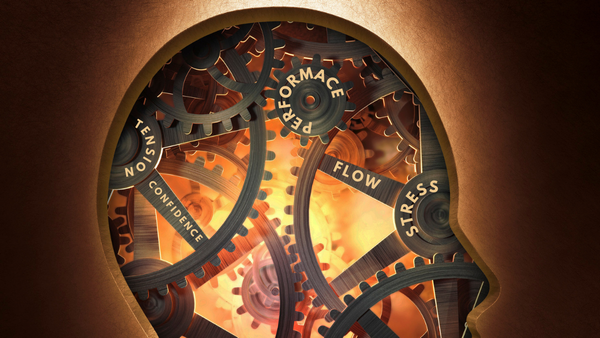
When pressure shows up : stage lights, self‑critique, or too much coffee - your body shifts into fight‑or‑flight. Breath goes high and fast. Muscles co‑contract. Timing gets jittery.
It’s protective, not personal.
Here’s the switch: longer exhales nudge the parasympathetic side (the brake pedal). Shoulders drop. Heart rate steadies. Hands stop arguing with each other. Rhythm clicks back into place.
If your breath runs away, your rhythm runs with it; if your breath steadies, your rhythm steadies too.
The Breath‑Body‑Beat Framework
Three steps. Sixty seconds. Use it before every practice, rehearsal, or gig.
Step 1 — Breath Reset
- Inhale low for 4.
- Exhale slow for 6.
- Three to five cycles.Why it works: longer exhale = calm gear. Your brain reads safety; your body follows.
Step 2 — Body Release
- Roll shoulders.
- Loosen jaw and lips.
- Shake hands like you’re flicking off water.Why it works: tension in the body becomes tension in the timing. Free one; free both.
Step 3 — Beat Anchor
- Tap a steady 4‑count with foot or fingertips.
- Keep the 4‑6 breath going.
- Let the tap, breath, and posture line up.Why it works: breath, body, and beat entrain each other. A nervous system metronome — no click required.
Try it now: One minute of Breath‑Body‑Beat. Notice the shoulders. Notice the space around the notes.
What Happens When You Skip It
I once turned a slow ballad into a motorway chase. Didn’t breathe. Didn’t reset. Shoulders up, heart racing, rhythm off. We’ve all been there.
Skipping regulation often shows up as:
- Shallow breathing: rushed phrases, shaky vocals.
- Locked shoulders/wrists: clumsy chords, tense tone.
- No anchor: drift, speed‑ups, hesitation at the hard bits.
Control your body before the music; control your music through your body.
Daily Drills (2–3 minutes total)
1) 2‑4 Breath Drill
- Inhale 2, exhale 4 while lightly tapping your thigh.
- 6–8 cycles.
- Keep the jaw slack and eyes soft.
2) Shoulder‑Beat Sync
- Slow 4‑count.
- Roll shoulders forward on 1–2, back on 3–4.
- 4–6 rounds, then play something simple without breaking the tap.
3) 60‑Second Pre‑Performance Reset
- Three long breaths (4 in, 6 out).
- Shake out hands, soften jaw.
- Tap a 4‑count.
- Start the piece on the next bar line you tap. No panic starts.
Tip: Do these before you practice technique. Focus grows roots when your body feels safe.
Why This Works Beyond Music
Breath‑Body‑Beat isn’t just for the stage. Use it before a tough conversation, a presentation, or when life gets loud. You’re training a habit: regulate first, then act. The world throws chaos; you answer with rhythm.
You don’t regulate after the performance, you regulate so there can be a performance.
Common Mistakes (and quick fixes)
- Forcing huge breaths. Fix: Smaller, slower, lower. Think “pour,” not “suck.”
- Over‑relaxing into a slump. Fix: Tall through crown of head, ribs floating, shoulders easy.
- Tapping too fast. Fix: Drop to 60–72 BPM. Calm lives in the slower lanes.
- Losing the breath once you start. Fix: Keep the 4‑6 breathing for the first 8 bars.
Conclusion: Calm First, Music Second
Don’t light yourself on fire to keep others warm and don’t burn your nervous system to prove you care about the song. Align first. Then play.
Before your next session, give me sixty seconds: breath, release, anchor.
From chaos to rhythm. From clench to flow. That’s how you step on stage with confidence.
CTA: Try this before your next practice and tell me what changed — timing, tone, or the courage to begin.
Gentle Octaves is a music coaching space for adults over 40 returning to creativity or just starting out. With a background in Psychology, Osteopathy, and Corrective Exercise, we help people overcome pain, anxiety, and self-doubt through music.
You'll learn:
- The 7 Pillars of Guitar Posture that actually matter
- How to warm up properly
- Daily hand stretches to prevent tension and overuse
- Fretting and strumming technique that protects your joints
- A repeatable, pain-free practice routine for consistent progress
- Warning signs to look out for before pain becomes injury
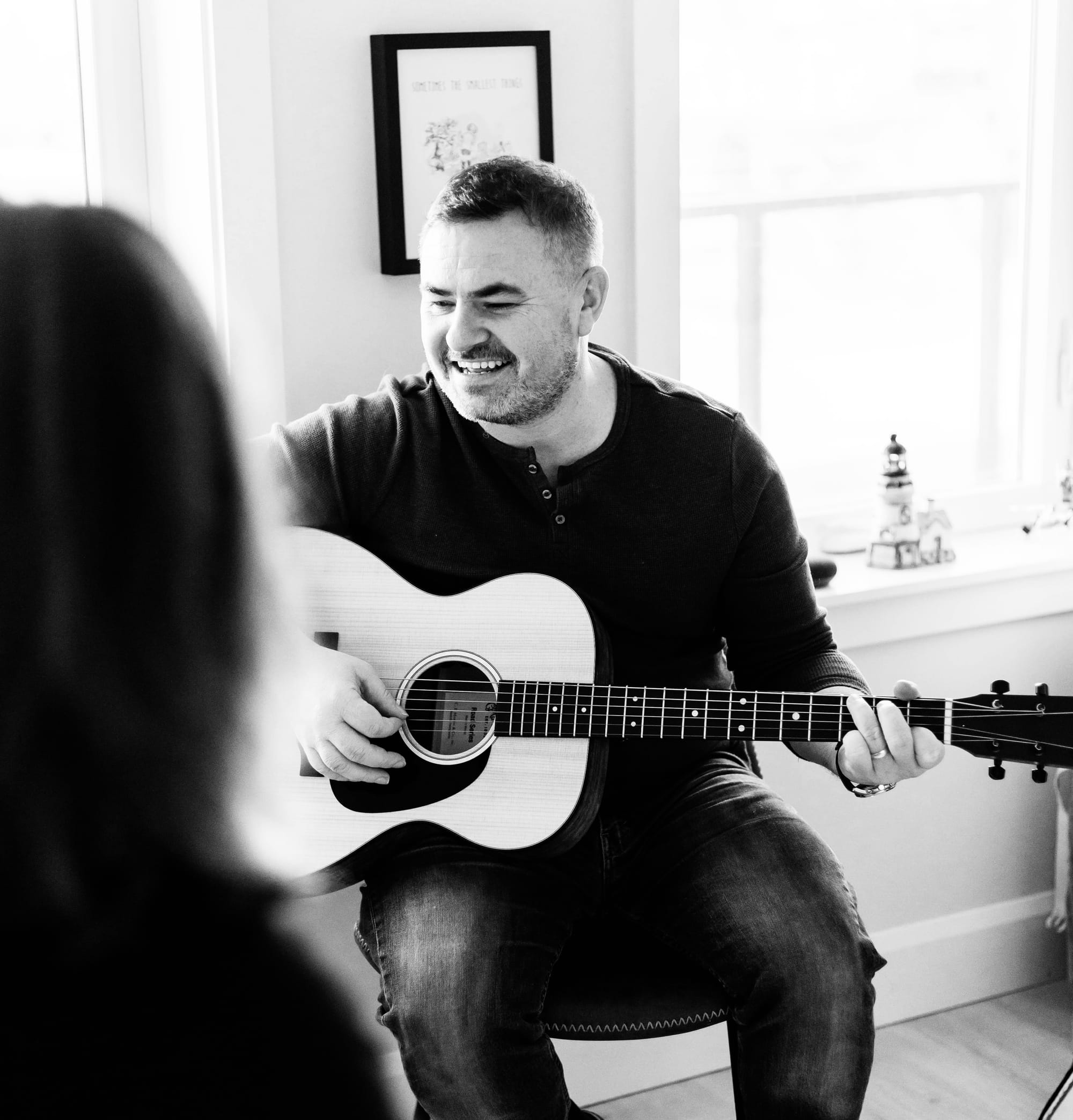
F.P. O’Connor
F.P. O’Connor is a manual osteopath, psychology grad, and lifelong musician who helps adults play with less pain and more confidence.
Through Gentle Octaves Studio, he blends science, movement, and musicianship to help mature players keep creating for life.
www.gentleoctaves.com
Release → Reset → Rebuild™ your sound
FAQ
Q: What exactly is the “Breath-Body-Beat” method?
AEO concise:
It’s a three-layer approach that links breath, body, and rhythm to improve calm, control, and presence while playing.
The method works on three levels at once: breath to regulate the nervous system, body alignment to reduce unnecessary tension, and rhythmic grounding to stabilise your sense of time. Together, they help reduce panic, improve focus, and keep you connected to the music instead of stuck in your head. This is educational guidance not a therapeutic or medical intervention.
If your breathing, posture, and rhythm feel aligned, your playing usually settles quickly.
Q: Do I need a special tool or equipment to use it?
No it uses simple practices you already have access to. Breath-Body-Beat relies on conscious breathing, posture resets, and rhythmic playing or tapping. You can apply it with just your guitar and, optionally, a timer or metronome. There’s no special hardware involved.
If you can breathe, sit or stand, and keep time, you can use this method.
Q: How quickly will I feel the effects in rehearsal or performance?
Many players notice benefits within a single session.
Reduced tension and clearer focus often show up quickly once breath and body settle. Longer-term benefits like steadier rhythm under pressure and improved nervous system regulation build with consistent use over time.
Q: Does this method help with performance anxiety or just rhythm issues?
It helps with both. By regulating breath and body, you reduce the threat response that drives performance anxiety. The beat layer then anchors you in musical flow, helping bridge physical calm with confident, rhythmic playing.
If nerves ease and your groove holds under pressure, the method is doing its job/ However this is not a treatment for anxiety disorders and you should seek professional treatment if you have an anxiety disorder.
Sources
Kenny, D.T. (2011). Defining music performance anxiety (Chapter 4, pp. 47-82). In D.T. Kenny (2011). The Psychology of Music Performance Anxiety. Oxford: Oxford University Press.
Kenny, D. T. (2005). A Systematic Review of Treatments for Music Performance Anxiety. Anxiety, Stress, & Coping, 18(3), 183–208. https://doi.org/10.1080/10615800500167258
Lars Ole Bonde, Knud Juel & Ola Ekholm. (2018) Associations between music and health-related outcomes in adult non-musicians, amateur musicians and professional musicians—Results from a nationwide Danish study. Nordic Journal of Music Therapy 27:4, pages 262-282. https://www.tandfonline.com/doi/full/10.1080/08098131.2018.1439086
Zaccaro A, Piarulli A, Laurino M, Garbella E, Menicucci D, Neri B, Gemignani A. How Breath-Control Can Change Your Life: A Systematic Review on Psycho-Physiological Correlates of Slow Breathing. Front Hum Neurosci. 2018 Sep 7;12:353. doi: 10.3389/fnhum.2018.00353. PMID: 30245619; PMCID: PMC6137615. https://pubmed.ncbi.nlm.nih.gov/30245619/