When 'Good Enough' Becomes More Than Enough


I was jamming last week. Just noodling around the fretbaord, nothing too serious. An old Neil Young song I've known for decades.
My fingers found the chords without thinking, the rhythm settled into that loose, swaying groove, and for about four minutes, I wasn't trying to be anything.
I was just playing.
And then I stopped. Not because I was tired or because I'd finished the song. I stopped because I noticed something that's been creeping up on me for years now:
I sound good enough.
Not perfect. Not flawless. Not like I did when I was 25 and had all the time in the world to obsess over every detail. But good enough.
Actually, more than good enough. Good in a way that matters more than technical precision ever did.
And that realization hit me harder than I expected.
The Younger Version of Yourself is a Liar
Here's what nobody tells you when you're young and learning guitar: the version of yourself who could play faster, cleaner, longer isn't actually better than who you are now.
I know. That sounds like the kind of thing someone says to make you feel better about getting older. But stay with me.
When I was in my twenties, I could play for hours without my hands complaining. I could nail solos note-for-note. I had speed. I had endurance. I had that arrogant confidence that comes from not yet knowing how much you don't know.
But I didn't have feel. Not real feel. I had technique masquerading as emotion.
I was so busy trying to prove I could play that I forgot to ask myself why I was playing in the first place.
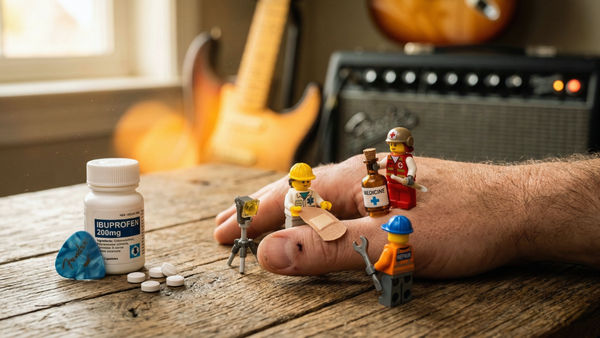
Now? My hands hurt if I push too hard. I can't play as fast as I used to. I forget passages I used to know cold. But when I play, it means something. There's weight to it. There's history in every note.
That younger version of me was chasing perfection. This version is chasing connection. And connection is a much better feeling than chasing perfection contantly.
What Perfectionism Actually Costs You
Let me tell you what perfectionism took from me, and maybe you'll recognize some of this in yourself.
It made me afraid to play in front of people. Because what if I messed up? What if I wasn't as good as they thought I'd be? Better to not play at all than to risk being mediocre.
It killed my enjoyment of practice. Every session became an audit. Did I improve? Did I get faster? Did I fix that transition? If I couldn't measure progress, it felt like a waste of time.
It stopped me from writing my own music. Because nothing I created was ever good enough to share. I'd write something, listen back, compare it to records I loved, and decide it wasn't worth finishing.
It made me judgmental of other players. If I was holding myself to impossible standards, I was doing the same to everyone else. Someone played a wrong note? I noticed. Someone's timing was off? I heard it. And I felt superior for noticing, which is maybe the saddest part of all.
Perfectionism didn't make me a better player. It made me a smaller one.
It kept me safe. It kept me controlled. It kept me from actually connecting with music in any real way.
And the mad thing is, I thought this was discipline. I thought this was what serious musicians did. Turned out it was just fear wearing a productivity mask.
The Moment Everything Shifted
There was a night about three years ago. I was at a friend's house, just a small gathering, and someone handed me a guitar.
I hadn't planned to play. I was tired. My hands were stiff. I knew I wasn't going to sound great.
But I played anyway. Nothing fancy just a few of the go to songs I could play without thinking or worrying about missing a chord . And halfway through, I looked up and saw people listening. Not judging. Not critiquing. Just there with me in the music.
And I thought: Ah this is it! This is what it's supposed to be.
Not a performance. Not a demonstration of skill. Just this moment, this connection, this shared space where the music lives.
I made mistakes. I forgot a lyric. My timing wasn't perfect. And nobody cared. Because the feeling was there. The thing underneath the notes was there.
That night, something in me let go. Not all at once. Not permanently. But enough to crack the door open to a different way of being with music.
Good enough, I realized, is actually the whole point.
What 'Good Enough' Actually Means
It doesn't mean settling. It doesn't mean giving up on improvement. It doesn't mean you stop caring about your craft.
Here's what it means:
It means playing is more important than perfection. You'd rather make music than make excuses about why you're not ready yet.
It means your current ability is valid. You're not waiting to become good enough to enjoy playing. You're good enough right now. Today. With the hands and the skills and the limitations you've got.
It means mistakes are part of the music. That wrong note you hit? It's not a failure. It's a moment. It's human. It's real. Sometimes the mistakes are the most interesting part.
It means your relationship with music is more important than your technical ability. If you love playing, if it brings you peace or joy or helps you process your life, that matters infinitely more than whether you can play like your heroes.
It means you're allowed to sound like yourself. Not like the album version. Not like the tutorial video. Like you. With your timing, your feel, your particular way of holding a note.
Good enough means you've stopped trying to be someone else and started being fully, messily, beautifully yourself.
Rediscovering Joy (Or Finding It for the First Time)
I play differently now. Not because my technique has improved, though in some ways it has. I play differently because I'm asking different questions.
I used to ask: Did I play that correctly?
Now I ask: Did that feel good?
I used to ask: Would this impress someone?
Now I ask: Does this mean something to me?
The shift is subtle but massive. It's the difference between music as performance and music as conversation. Between guitar as something you conquer and guitar as something you befriend.
And here's the wild part: I'm better now than I was when I was obsessed with being perfect.
Not technically. Technically, I've lost some things. But musically? I'm better. I listen more. I leave space. I play with more intention and less ego. I'm present with the music instead of performing for an imaginary audience that's judging every move.
The joy came back because I stopped demanding that music prove my worth. I let it just be what it is: sound moving through time, and me moving with it.
What Your Playing Actually Proves
Here's a truth that took me decades to learn: your playing doesn't prove anything.
It doesn't prove you're smart. It doesn't prove you're disciplined. It doesn't prove you're better than anyone or worse than anyone.
It's just an expression. That's all. An expression of who you are in this moment, with these hands, with this history, with whatever you're carrying today.
Some days you'll play beautifully. Some days you'll sound like shit. Both are fine. Both are real. Both are part of the process.
The goal isn't to always sound good. The goal is to keep showing up. To keep making the sounds. To keep the conversation going between you and the instrument.
Because the music doesn't care if you're perfect. The music just wants you to play.
Permission to Stop Trying So Hard
So here's what I want to tell you, especially if you're someone who's been carrying the weight of perfectionism for years:
Stop trying so hard.
Play something simple and let that be enough.
You're allowed to make mistakes and laugh about them instead of spiraling into self-judgment.
You're allowed to enjoy the process without constantly measuring whether you're improving.
You're allowed to sound like yourself instead of like the records you love.
You're allowed to be exactly where you are right now and call that good.
Not good enough. Just good. Full stop.
This isn't giving up. This is growing up. This is understanding that the point of music isn't to be flawless. It's to be full. Full of feeling, full of presence, full of your particular human experience.
That younger version of you who could play faster and cleaner? They had something. But you have something too. You have wisdom. You have perspective. You have lived enough life to know what actually matters.
That's more than enough.
What Changes When You Let Go
When I stopped chasing perfection, here's what happened:
I started finishing songs I'd abandoned because they weren't "good enough." Turns out they were fine. They just needed to be released instead of refined to death.
I started playing with people again. Jam sessions. Casual hangouts. Nothing formal. Just music for the sake of music.
I started enjoying my practice sessions instead of dreading them. Because I wasn't trying to fix myself anymore. I was just exploring.
I started writing again. Not trying to write the perfect song. Just putting things down. Seeing what emerged. Letting it be messy and honest instead of polished and safe.
And I started playing more. Not because I was trying to get better. Because it felt good.
That's the irony of all this: when you stop demanding perfection, you end up playing more. And when you play more, you actually do improve. Not because you're forcing it. Because you're enjoying it.
The thing you were chasing by being perfect is the thing you get by letting go of perfection.
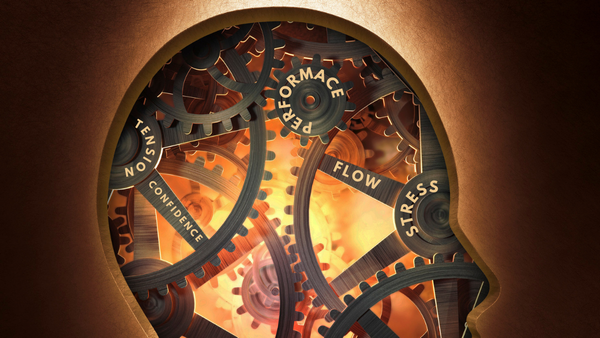
Connection. Joy. Flow. Presence.
That's what music is supposed to give you. Isn't that what you've been chasing after this whole time?
The Question That Changed Everything
I'll leave you with this.
A friend asked me a few years ago: "If you could only play guitar for yourself for the rest of your life, if no one would ever hear you play, no one would ever know how good or bad you were would you still play?"
I said yes immediately. But then I sat with that question for a while. Because I realized: if the answer is yes, then why am I playing like someone's watching?
Why am I holding myself to standards that don't actually matter to me? Why am I chasing approval that I don't need?
The music is for me first. If other people connect with it, brilliant. But it's for me.
And when I play for me, really for me, not for the critic in my head pretending to be me, I don't need to be perfect. I just need to be present.
That's the shift. That's the whole thing.
Good enough isn't a compromise. It's liberation.
It's the moment you stop auditioning for your own life and start living it.
So play your simple songs. Make your mistakes. Sound like yourself. Let the music be what it is.
You're not preparing to be good enough someday.
You already are.
Right now. Today. With exactly what you've got.
Now go play something. Not to prove anything. Just because you can.
F.P. O’Connor
F.P. O'Connor is a Musician and Movement Specialist whose work is informed by extensive training in Manual Osteopathy, Psychology, and Strength Coaching.
He is the founder of Gentle Octaves, helping adult players develop practical, science-based systems for ease, control, and long-term playing confidence.
FAQ
Q: Is it normal to feel like I’m not as good as I used to be on guitar?
Yes it is, many players notice changes in speed, endurance, or memory over time, but that doesn’t mean their playing is worse or less meaningful.
What usually changes with age isn’t musicality, it’s actual capacity. Less time, stiffer hands, more responsibility.
But many players gain something far more valuable in return: feel, restraint, and emotional clarity. You may play fewer notes now, but they often carry more weight.
Q: Why does playing feel better now, even though my technique isn’t what it was?
Because connection and presence often matter more than technical precision, especially as you mature as a musician.
When you stop trying to prove something, your nervous system relaxes. Your timing settles. Your phrasing breathes. Music stops being an exam and becomes a conversation again.
That shift alone can make your playing feel richer, even if it’s technically simpler.
Q: Is perfectionism actually holding me back as a musician?
Likely yes, its very common and we all go though it at some stage of our musicianship. Perfectionism often reduces enjoyment, confidence, and creative output more than it improves skill.
Perfectionism disguises itself as discipline, but it usually runs on fear: fear of mistakes, fear of judgment, fear of not being enough.
Over time it shrinks your musical world so you take fewer risks, fewer songs shared, fewer moments of real connection.
Most players don’t stop because they lack ability. They stop because nothing ever feels “ready.”
“Many musicians discover that ‘good enough’ isn’t settling: it’s the moment when connection replaces perfection.”
Q: Why am I more self-critical now than when I was younger?
As adults we carry more context, comparison, and self-expectation, which can amplify internal judgment.
You’ve heard more music. You know what’s possible. You know where you fall short.That awareness can deepen artistry or turn into constant self-surveillance. The difference is whether you let awareness serve expression, or police it.
Q: Does “good enough” mean giving up on improving?
No not at all: “good enough” means valuing the act of playing over endless self-correction.
You can still grow, learn, and refine, just without postponing joy until some imaginary future version of yourself arrives. Good enough isn’t the end of the journey. It’s permission to actually be on it.
Q: Why do mistakes feel less important than they used to?
Because emotional communication matters more than technical accuracy once you stop performing for approval.
Most listeners don’t remember the missed note.
They remember how the music made them feel. Read that again. And think of the last time you saw a performance that was not perfect but still moved you.
Mistakes don’t break connection tension does. Presence does the opposite.
Q: Is it okay to just play for myself and not “progress” all the time?
Yes, we dont all want or need to be live performers. Playing for enjoyment and meaning is a valid and healthy relationship with music.
Music doesn’t owe anyone productivity.
If playing helps you process life, feel grounded, or reconnect with yourself, that’s not lesser than improvement it’s often deeper and more personal and Ive seen hundreds of musicians who are completely content just making music for themselves.
Q: Why does music feel more emotional now than when I was younger?
Because lived experience gives music context, and context gives notes weight.
You’ve lived more. Lost more. Loved more. Survived more. This is also why sometimes songwriting can actually become easier as we age. We have the context to actually truly connect with the message we are often trying to express when writing songs.
When you play now, that history comes through not as virtuosity, but as truth.
That’s not decline. That’s depth.
Q: How do I stop comparing myself to my younger self?
By recognising that your younger self was often chasing performance, while your current self is chasing connection.
They’re not the same goal.
Speed and endurance serve one. Meaning and presence serve the other.
Comparison only hurts when you pretend they should be measured by the same ruler.
Q: What does it actually mean to “sound like yourself”?
It means letting your timing, touch, and choices reflect who you are now not who you think you should be.
Sounding like yourself isn’t about copying records or tutorials.
It’s about allowing your hands, history, and instincts to shape the music without apology.
And everyone started out copying or being influenced by other sounds and musicians. Eventually your sound will come through over time, its already your whether you realize it or not: its coming form your hands and your unique story.