The Guitar Sat in the Corner for Three Years (And Why That's Actually Okay)

Happy new year! If playing again or playing more is one of your goals for 2026 then this post is for you. The stories we tell ourselves often have a bigger impact on our playing than any physical limitations or playing related pain.
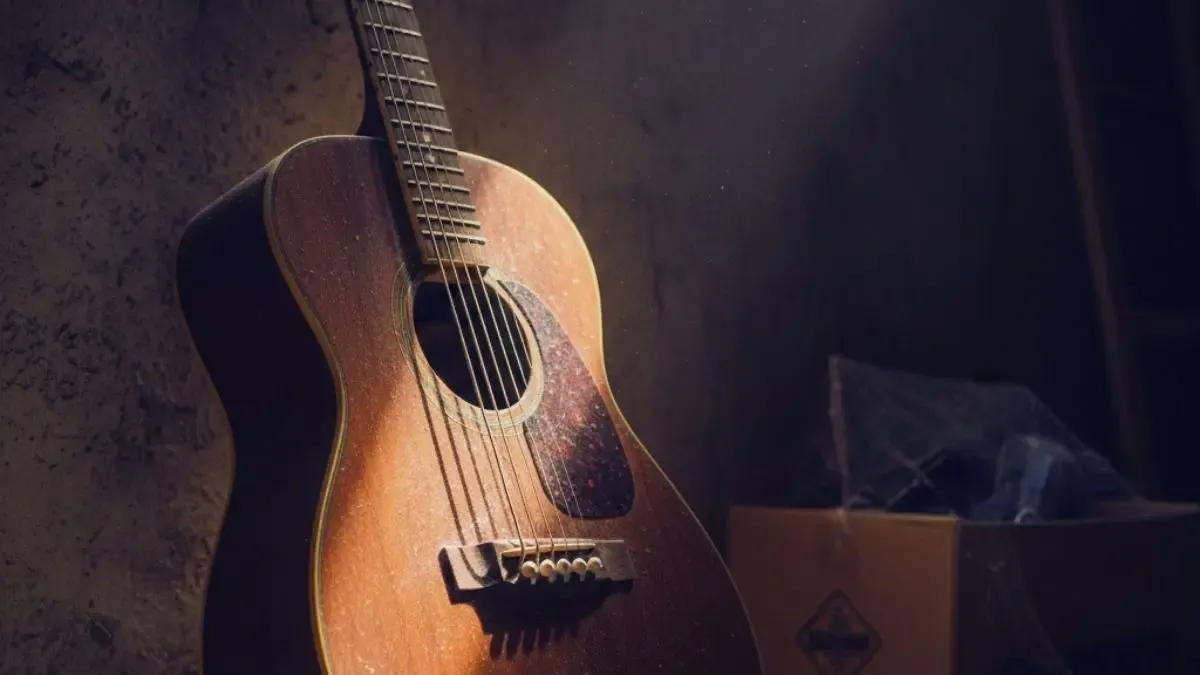
I want to talk about the guitar sat in the corner, or the attic or maybe storage somewhere. There's a specific kind of dust that collects on an instrument that hasn't been played. Not the regular dust that settles on everything else in your house, but this particular layer that somehow feels accusatory.
Like it knows.
Mine sat in the corner of my bedroom for three years. Not in a case where I could pretend it didn't exist. Right there.
Where I'd see it every morning when I woke up and every night before bed. A silent witness to all the times I told myself "maybe tomorrow."
I know I'm not alone in this. I've worked with enough musicians to recognize the specific tension that shows up in someone's jaw when they mention the instrument they haven't touched in months.
Years, sometimes. The way they'll laugh it off, make a joke about it, then immediately change the subject.
There's a little bit of grief in that space. Actual grief.
The Story We Tell Ourselves
Here's what I used to think: If I wasn't the guitarist I was at 25 fast, fluid, able to play for hours without thinking about it then what was the point of picking it up at all?
That's the trap, isn't it?
We frame "getting back to it" as returning to some previous version of ourselves. Like there's a specific skill level we need to reclaim before we're allowed to enjoy playing again. Before it counts.
I mean, look at the language we use.
"Getting back into shape." "Rebuilding chops." "Recovery."
All of it implies there's a deficit that needs correcting. That the person you are now, with your current hands and your current life and your current relationship with music, is somehow less than.
That's bollocks.
The guitar didn't judge me for those three years. The dust didn't care. The only one keeping score was me, and I was using a scoring system designed to make sure I'd never be good enough.
What Actually Happens When You Stop
I need to tell you something about bodies, because this is where my osteopath brain and my musician heart have the same conversation.
When you stop playing for a while, things change.
Your calluses soften. Your fingers lose that specific strength and endurance. The neural pathways that made certain patterns feel automatic start to fade. Not gone, just... quieter.
But here's what else happens: Your nervous system gets a bloody rest.
Think about it. How many guitarists do you know who played through pain because they thought they had to?
Who pushed and pushed until their hands, their necks, their shoulders started whispering, then talking, then shouting?
Sometimes stepping away isn't failure. Sometimes it's your body finally getting permission to not hurt for a while.
I worked with a session player once who'd been grinding for years. Proper grinding from studio to gig to practice to studio.
He had too because as he said , "thats the business, if Im not doing it someone else will" and "I just need to take the work while its there in this business"
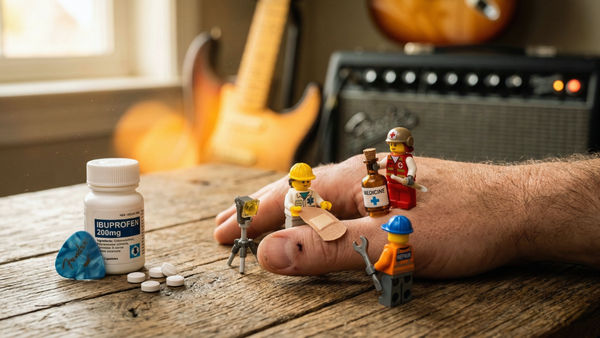
His forearms were like rope, tight and knotted, and he'd lost sensation in two fingers of his fretting hand. Not completely, but enough that he'd notice it when he tried to play quietly, with nuance.
"I haven't taken more than a week off in eight years," he told me. Said it like a badge of honor.
Six months later, after his body basically forced him to stop and he couldn't grip properly, couldn't make it through a full session he came back again. Scared out of his mind that he'd lost everything.
He said he had to take some part time work at a retail DIY store to pay the bills. He hadn't played in over two months. He came to see me wondering if he could ever get back to the level he was at and wondering if his session days were officially over.
But something interesting had happened in those months. His forearms had released.
The sensation in his fingers had returned. This was before we even worked on developing a plan for Step 1 Release of the RRR™ System I use.
I pointed this out to him and noted he should just focus on awareness over the next few weeks becoming familiar with his own body and its patterns. We worked on some exercises to help him bring awareness to his music and his body.
And when he finally picked up his guitar again, he noticed things he'd never noticed before.
The weight of the instrument. The way different strings felt under his fingertips. How much tension he'd been holding in his jaw while he played.
"It's like," he said, "I forgot that playing could feel... I don't know... curious?"
That's the word that stayed with me. Curious.
The Comeback That Isn't a Comeback
When I finally picked up my guitar after those three years, I had this whole narrative ready.
About discipline and dedication and "doing the work." Very serious. Very worthy.
Lasted about ten minutes.
Because my hands weren't 25 anymore. They'd been through three years of life working with clients, typing, cooking, existing in a body that had aged and changed and held different stories than it did before.
My fingers didn't want to play the fast, aggressive stuff I used to love. They wanted to move slowly. Feel the strings. Notice the resonance.
At first, I thought this was the problem. That I needed to push through this slow, exploratory phase to get back to "real playing."
Took me another six months to realize: This is real playing. Maybe more real than anything I'd done before.
The technical ability I had at 25 was built on a lot of things: youth, sure, but also a kind of recklessness. A willingness to override what my body was telling me in service of the sound I wanted to make.
That creates a specific kind of playing. Fast, often impressive, sometimes beautiful.
But not always connected.
Not always curious.
What Your Hands Know Now
Your hands right now, the ones reading this, the ones that haven't touched your instrument in however long they know things your younger hands didn't.
They know about restraint. About the space between notes mattering as much as the notes themselves.
About how tension in your shoulder travels down through your elbow into your wrist and shows up as that specific stiffness in your fretting hand that makes everything feel harder than it should.
They know about grief and joy and the thousand small adjustments you make every day just to move through your life. That's not a deficit. That's information.
I'm not saying the technical stuff doesn't matter. Of course it matters.
But maybe, just maybe, the point isn't to recapture what you could do at 25. Maybe the point is to discover what you can do now, with these hands, with this awareness, with this specific constellation of experiences that nobody else has.
The guitarist you were at 25 couldn't play what you can play now.
Not because of technical ability, but because they hadn't lived enough to know what these particular notes mean.
The Small Door Back In
So yeah, the guitar sat in the corner for three years.
And when I finally picked it up again, I didn't launch into scales or old setlists or any of the things I thought I "should" do.
I played one chord. Held it. Listened to it fade.
Then I played it again.
That was the whole practice. One chord, over and over, just noticing.
The pressure in my fingertips. The way my thumb supported the neck. The tiny adjustments happening in my shoulder and jaw without me consciously choosing them.
Boring? Maybe. But here's what happened: For the first time in years, playing didn't feel like a test I was failing.
It felt like a conversation I was finally ready to have.
The technical stuff started coming back. Slowly. Some of it returned easier than I expected, muscle memory still there waiting in the wings.
Some of it required actual work, proper work, the kind where you have to be patient with yourself and your hands and the fact that everything takes longer than you think it should.
But the relationship changed. I wasn't trying to prove anything anymore. Not to myself, not to the dusty guitar, not to some imaginary audience keeping track of whether I was "still good."
I was just... playing. Learning what these hands could do. What they wanted to say.
If You're Reading This
Maybe you've got an instrument in the corner too. Maybe it's been there for months or years, collecting that specific kind of dust that feels like judgment.
Here's what I'd tell you, if we were sitting across from each other with coffee: It's okay that it's been there. Really okay.
The time away wasn't wasted. Your body wasn't being lazy or weak or any of the other stories you might be telling yourself.
It was living. Adapting. Integrating experiences that your hands now carry.
When you're ready and I mean actually ready, not "should be ready", the door back in doesn't have to be some grand return. It can be small.
One chord. One scale, played slowly enough that you notice what's happening in your whole body, not just your fingers.
It can be curious.
The thing about stepping away and coming back is this: You don't come back as the same person. You come back as someone who knows what absence feels like.
Who knows that the music doesn't disappear just because you're not actively making it. Who understands, maybe for the first time, that your worth as a musician and maybe even as a person , isn't measured in unbroken practice streaks or calluses that never fade.
You come back with different hands. Hands that have held other things, done other work, lived other moments. Those hands have something to say.
Maybe it's time to listen.
What This Actually Looks Like
Look, I'm not going to tell you that picking up your instrument after a long time away will be easy or magical or that everything will just flow.
Some days it will feel frustrating as hell. Your hands will remember the shapes but not the endurance.
You'll hear the music in your head but your fingers won't quite get there yet.
That's part of it.
But here's what many guitarists experience when they approach a return with curiosity instead of judgment: They notice patterns they never saw before.
The way their body wants to organize itself around the instrument. Small tensions that were always there but never had space to be felt.
New possibilities in familiar passages because they're not just muscle-memorying their way through anymore.
It's not about rebuilding what was. It's about discovering what is.
So tonight, if you want, do something small. Not "practice." Just... connection.
Pick up the guitar. Don't plug in, don't set a timer, don't worry about whether your hands remember anything.
Just hold it. Feel the weight. Notice what comes up, the guilt, the grief, the excitement, whatever it is. Let it be there.
Then, if you feel like it, play one note. Just one. Listen to it all the way through until it fades completely.
That's not a warmup. That's not preparation for the "real work."
That's playing. That's the thing itself.
The rest will come if you let it. On its own time, in its own way, with the hands you have right now.
And those hands? They're exactly the ones you need.
Now take a breath. A proper one, all the way down. Feel your ribs expand. That's your body saying hello, reminding you it's been here the whole time, waiting for you to notice. The guitar will still be there tomorrow. So will you. And that's enough.
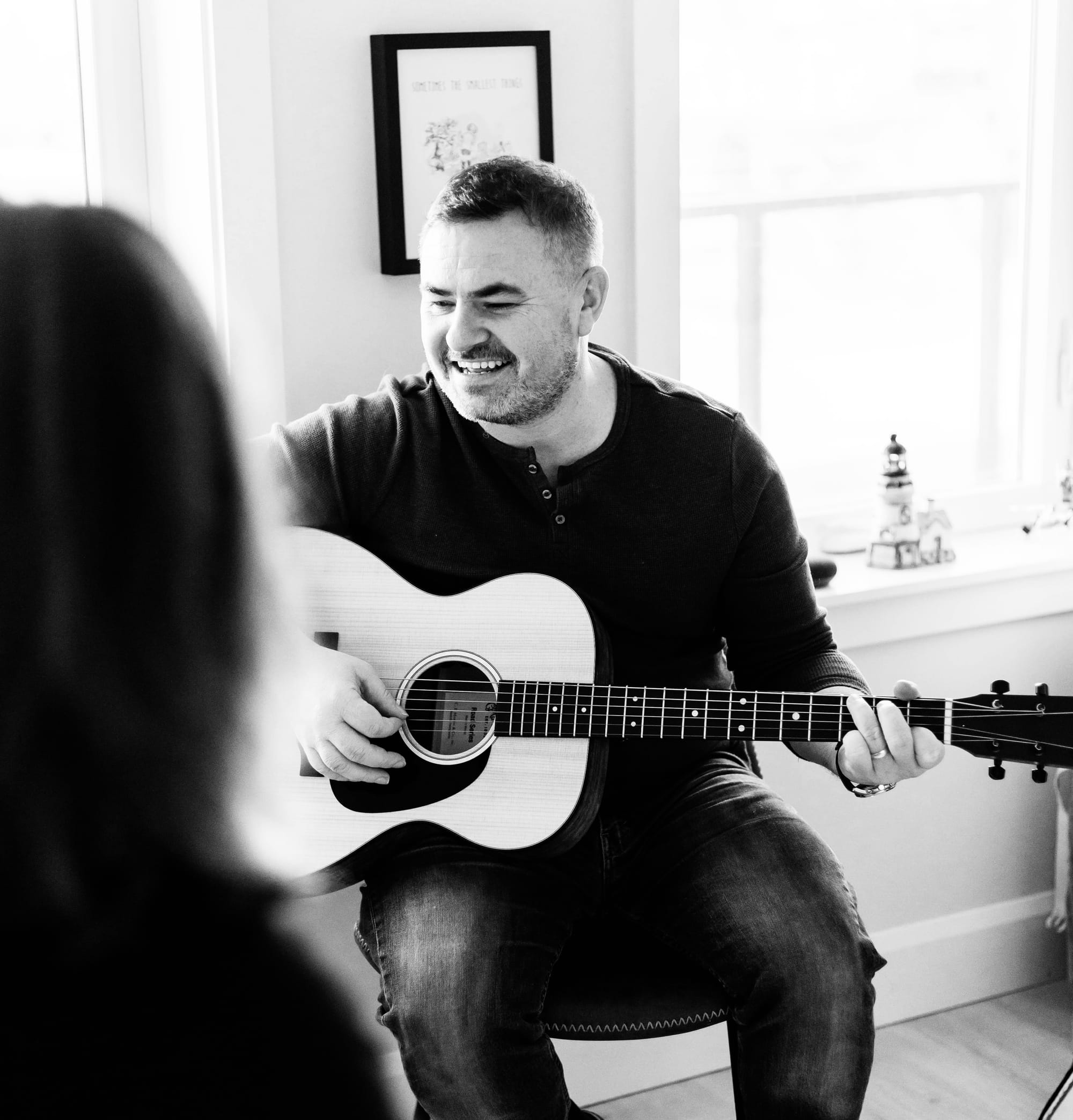
F.P. O’Connor
F.P. O'Connor is a Musician and Movement Specialist whose work is informed by extensive training in Manual Osteopathy, Psychology, and Strength Coaching.
He is the founder of Gentle Octaves, helping adult players develop practical, science-based systems for ease, control, and long-term playing confidence.